
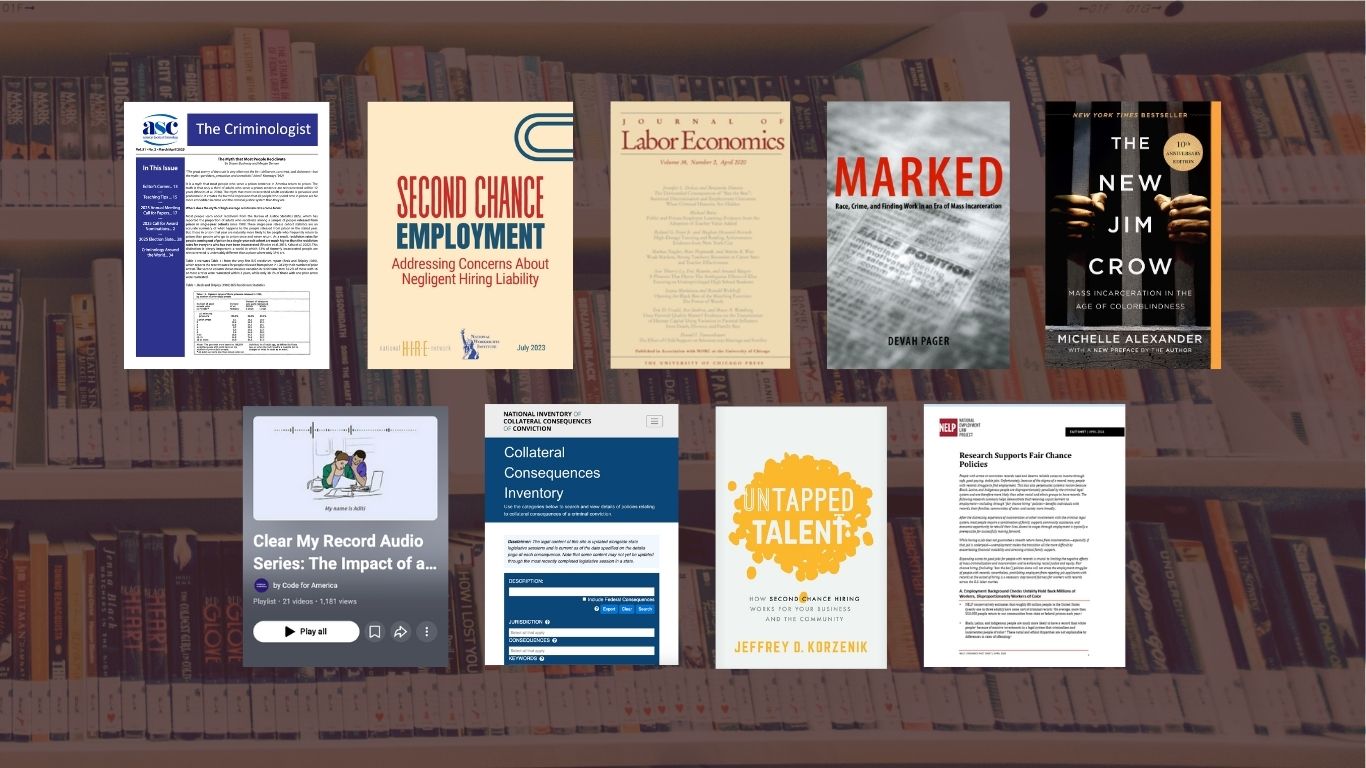
Fair chance hiring works when structural barriers are removed, and proven models are put into practice. These must-read articles, books, and reports offer research, data, and policy context for the models in our Fair Chance Hiring series. They explain how hiring bias limits economic growth and how record-related barriers reduce labor market participation, guiding readers toward effective interventions. The insights show how and where these innovators are finding success and outline what is needed to replicate the expansion of opportunities nationwide.
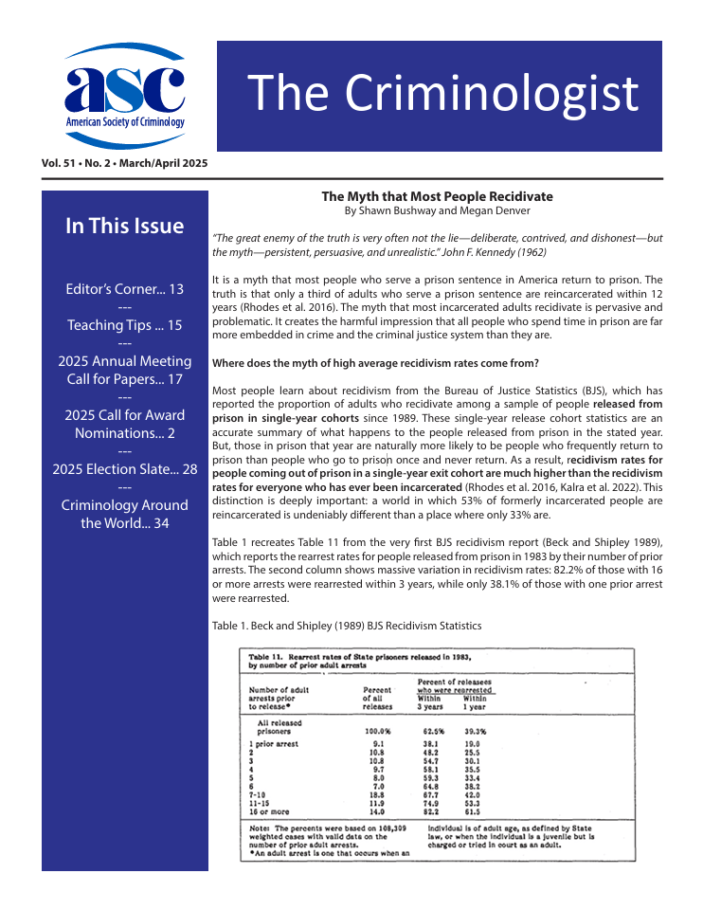
1. “The Myth that Most People Recidivate” by Shawn Bushway and Megan Denver (2025)
Contrary to common beliefs, it is not true that over 50% of people who were incarcerated will be reincarcerated. This frequently cited statistic provides a misleading picture.
In fact, new research shows that only about one-third of people who serve a prison sentence are ever reincarcerated—offering a clearer picture of people’s potential to build stable careers and care for their families and communities.
In a recent article, Shawn Bushway and Megan Denver uncover how a misreading of Bureau of Justice Statistics (BJS) data has distorted our understanding of recidivism. The commonly cited figure—that more than half of people released from prison return—comes from a single-year cohort sample that drastically overrepresents how often the system incarcerates the same people multiple times. When researchers correct this sampling bias, the true rate of reincarceration falls dramatically.
Why does this matter?
Because, as Bushway and Denver note, “a world in which 53% of formerly incarcerated people are reincarcerated is undeniably different than a place where only 33% are.” When policymakers, employers, and landlords rely on the inflated figure, they reinforce unfounded fears and institutional barriers—making it harder for people to rebuild their lives and for communities to thrive.
If we want to design systems that reflect people’s real potential—not myths about risk—we need to start with accurate data and misunderstandings about how people and systems work.
2. “Second Chance Employment: Addressing Concerns About Negligent Hiring Liability” by Lewis Maltby and Roberta Meyers (2023)
Many qualified people continue to face unnecessary barriers to employment because of legal fears about prior interactions with the criminal-legal system.
The reality? Almost all negligent hiring cases over the past 48 years involved just seven specific high-risk job types, often where vetting wasn’t thorough. For most office, factory, and other common roles, liability is extremely rare.
According to the Legal Action Center and National Workrights Institute report by Lewis Maltby and Roberta Meyers, “Second Chance Employment: Addressing Concerns About Negligent Hiring Liability“:
Employers who conduct thorough background checks—including prior records, work history, skills, and job-relevant competencies—are rarely held liable. Roughly 435 trial court decisions (~47 per year) found employers liable, nearly all of which were tied to those seven job types.
The takeaway: By implementing data-backed, thoughtful hiring practices, employers can access a broader pool of qualified talent and contribute to more equitable employment opportunities.

3. “The Unintended Consequences of Ban the Box: Statistical Discrimination and Employment Outcomes When Criminal Histories Are Hidden” by Jennifer Doleac and Benjamin Hansen (2020)
Doleac and Hansen show that while Ban the Box is intended to expand employment opportunities, in practice, removing this information may increase discrimination against specific demographics. When Ban the Box is in place, they found a lower probability of employment for Black men with only a high school diploma or a trade school equivalent (down 3.4 percentage points), and a 2.3 percentage-point decrease for Hispanic men with similar levels of education.
4. Marked: Race, Crime, and Finding Work in an Era of Mass Incarceration by Devah Pager (2007)
Over the past two decades, Ban the Box and Clean Slate laws have opened doors of opportunity for many job applicants who were previously excluded, but we still have much further to go. As we do it, it is important to remember the barriers that perception and prejudice create.
In her 2007 book, Marked, sociologist Devah Pager shared the results of her groundbreaking field experiment: job seekers whose applications reflected a prior criminal-legal system record received less than half the callbacks of their otherwise equally qualified peers.
In the study, Pager matched men of similar ages entering the workforce and randomly assigned one in each pair a fictitious record of prior interaction on the résumé of the other. She then sent them on hundreds of real job searches across Milwaukee to observe employer responses.
Pager also uncovered a distinct racial dimension: Black applicants without a fictitious record and white applicants with a fictitious record received similar callback rates, highlighting structural inequities in the labor market that operate independently of individuals’ qualifications. Pager’s findings reveal barriers in hiring that innovators are continuing to address today.
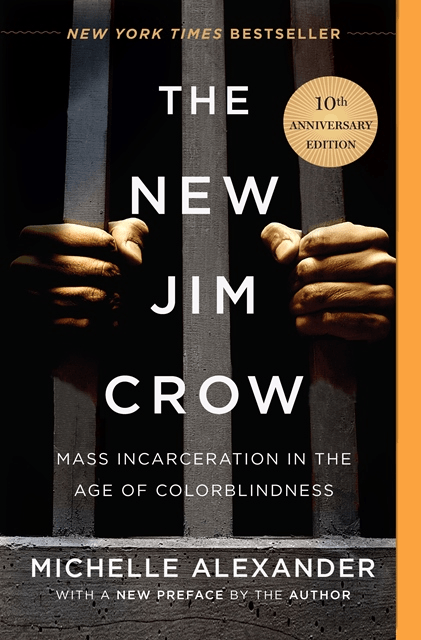
5. The New Jim Crow: Mass Incarceration in the Age of Colorblindness by Michelle Alexander (2010)
Michelle Alexander’s The New Jim Crow focuses attention on the disproportionate impact of the criminal legal system in the U.S.
Alexander shows that the mass incarceration of Black men is a continuation of Jim Crow laws through the criminal legal system. Heavy policing and harsh sentencing have disproportionately targeted communities of color for drug-related convictions, even though drug use is relatively equal across racial groups. Once arrested and convicted, people with interactions with the criminal legal system may never fully recover their rights.
Alexander centers the strength and agency of people directly impacted by incarceration, individuals who continue to push for inclusion. She advocates ending private investment in prisons, restoring voting rights, and reinvesting in education and housing as structural shifts that expand participation instead of managing exclusion.
Through her book, Alexander invites conversations about resilience, community strength, and the potential for reform within the system.

6. “Listen: The Impact of a Criminal Record on Jobs” by Aditi Joshi, Code for America (June 2021)
In a series of audio stories, Joshi highlights the voices of people actively seeking work and supporting their families—but who face persistent barriers created by a record of interaction with the criminal-legal system. Standard background checks and hiring processes can block access to stable employment, fair wages, and predictable hours, even for skilled and qualified applicants.
“Let’s say you have no criminal record,” one interviewee explains, “and I have a felony, and [the employer] is ‘felony friendly.’ We have the same skills, the same education…who’s going to get the job?”
Another highlights the stakes at home: “The day you come home and tell your wife you lost a job, and she knows finding the next one is the most difficult thing in the world…That’s a scary day.”
Joshi’s reporting shows the human impact of these structural barriers and why reforms like Clean Slate laws, which mandate automatic record clearance, are so critical.
Without such innovation, talented, experienced applicants continue to be routed into low-quality jobs—not because of their abilities, but because hiring systems outweigh past records. They result in reduced earnings, unstable work schedules, and chronic insecurity that ripple through families and communities.
7. “National Inventory of Collateral Consequences of Conviction” by the Council of State Governments Justice Center (2024)
40,000+ statutory and regulatory provisions across the U.S. limit where people with a record of criminal-legal system interaction can work, live, or obtain a professional license, even often long after having served a sentence. These “collateral consequences,” embedded throughout federal, state, and local statutes and regulations, were not designed as labor- or housing-market policy. Yet they impact who can participate in the economy and affect more than 70 million people.
The National Inventory of Collateral Consequences of Conviction (NICCC)—created under a federal mandate in 2007 and developed by the ABA, now maintained by the CSG Justice Center—systematically maps employment, licensing, and economic restrictions triggered by convictions across every U.S. jurisdiction.
NICCC makes the invisible visible, revealing how opportunity is structured. In many states, for example, an old conviction can bar an individual from becoming a barber or cosmetologist, even when the restriction has little connection to public safety or job performance. These rules often default to exclusion rather than assessing risk or relevance, creating structural barriers that shape markets and institutions.
Making these hidden rules visible changes what’s possible. State regulators and licensing boards have used NICCC data to remove blanket bans and refocus decision-making on risk and relevance specific to the job or opportunity.
NICCC opens the door to actionable change, enabling employers, policymakers, and others to (re)design systems so that capability, not old convictions, determine access to work, housing, education, and opportunity.
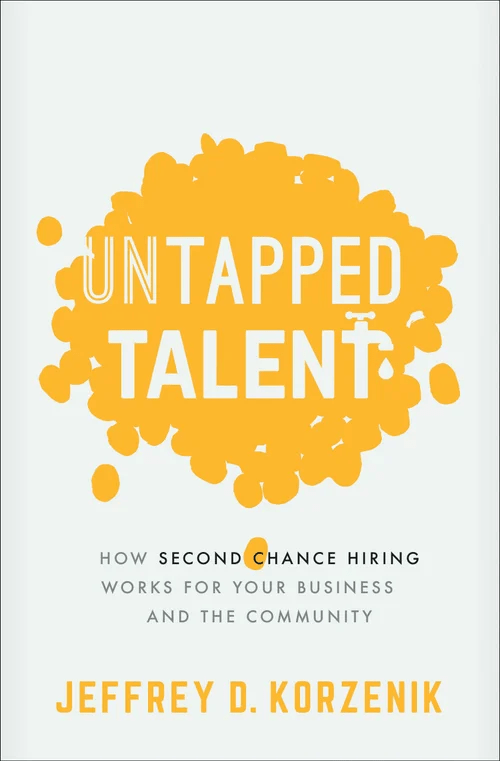
8. Untapped Talent: How Second Chance Hiring Works for Your Business and the Community by Jeffrey Korzenik (2021)
For millions, the criminal-legal system creates barriers to stable employment. In Untapped Talent, Korzenik illustrates how businesses that rethink outdated barriers have the ability and responsibility to convert this exclusion into economic strength.
Korzenik addresses legal and policy concerns employers and employees might have about hiring and supporting fair-chance hires. To reduce these risks, he suggests companies appoint a senior executive to evaluate candidates or create committees to assess fair-chance applicants.
JBM Packaging is a standout example. Facing a persistent talent gap, the company collaborated with nonprofits to establish transportation partnerships, provided training and mentorship opportunities, offered credit-repair support, and set up a pre-release training pipeline within a correctional facility. These initiatives formed the foundation of a hiring model that strengthened retention, improved performance, and fostered an inclusive company culture.
Korzenik highlights that when businesses are willing to redesign their structures, they can tap into talent that others overlook and gain a competitive advantage.
9. “Research Supports Fair Chance Policies” by Beth Avery (2024)
The U.S. economy loses up to $87 billion a year because the labor market creates barriers for people with prior interactions with the criminal-legal system. This has little correlation to job performance or public safety, and instead suppresses earnings, limits mobility, and weakens entire communities.
In “Research Supports Fair Chance Policies,” the National Employment Law Project’s (NELP) Beth Avery underscores a crucial point: when structures change, outcomes change.
People are held back from contributing to the economy, not because they lack skill or drive, but because outdated policies block them from contributing to their full potential. Prior records of interaction with the criminal-legal system can reduce annual earnings by up to 52% and leave individuals earning, on average, $192,000 less over a lifetime. These barriers, rooted in long-standing disparities in policing and prosecution, disproportionately affect Black, Latinx, and Indigenous communities. And with nearly half of all U.S. children having a parent with a record, the impact persists across generations.
Avery’s research illustrates what is possible when these barriers are removed. Cities like San Francisco, Minneapolis, Atlanta, and Durham County demonstrate that fair chance hiring policies expand access to good jobs without slowing hiring or compromising safety. In places that postpone background checks or require individualized assessments, the vast majority of qualified applicants with past records are ultimately hired. Workers with past records outperform stereotypes by staying longer, advancing faster, and enhancing retention, in ways employers regularly acknowledge.
Explore Case Studies on Fair Chance Hiring
- Honest Jobs – An Employee Centered Platform for Navigating Opportunities
- Rézme – An HR Compliance Platform
- The SOURCE – Employer Platform Supporting Complexity Management
- Employer Insurance – Reducing Risk and Uncertainty to Encourage Inclusive Hiring
What is Fair Chance Hiring?
Understand more about the structural innovation that is working to reintegrate the criminally incarcerated into the U.S. economy.